
Kalawao County Residents Directory
Kalawao County sits on the Kalaupapa Peninsula on the north coast of Molokai, and it works unlike any other county in Hawaii. It has no county government of its own. That changes how you use the Kalawao County Residents Directory. Most files sit with state offices, the National Park Service, or the Second Circuit Court on Maui. This page walks through where to search for records on the few dozen people who still call Kalawao home, plus the deep set of files on the old Kalaupapa Settlement.
Kalawao County Residents Directory Overview
Kalawao County Residents Directory Overview
Kalawao is the smallest county in Hawaii and one of the smallest in the whole nation. It was created on April 22, 1903. Its land is one and the same as the Kalaupapa National Historical Park. About 82 people lived there at the 2020 Census. No new patients or permanent residents are let in. The State Department of Health runs the place. One local resident, picked by the state, serves as the only sworn law enforcement on site. Access to the peninsula is limited. Visitors need a permit. Most records for this small group live in state files and in park files, not in a local clerk's office.
Because of this setup, a Kalawao County Residents Directory search looks more like a state records search with a Molokai slant. The Kalaupapa National Historical Park holds much of the land and co-manages the site. The park and the state share the job of keeping the peninsula's files safe.
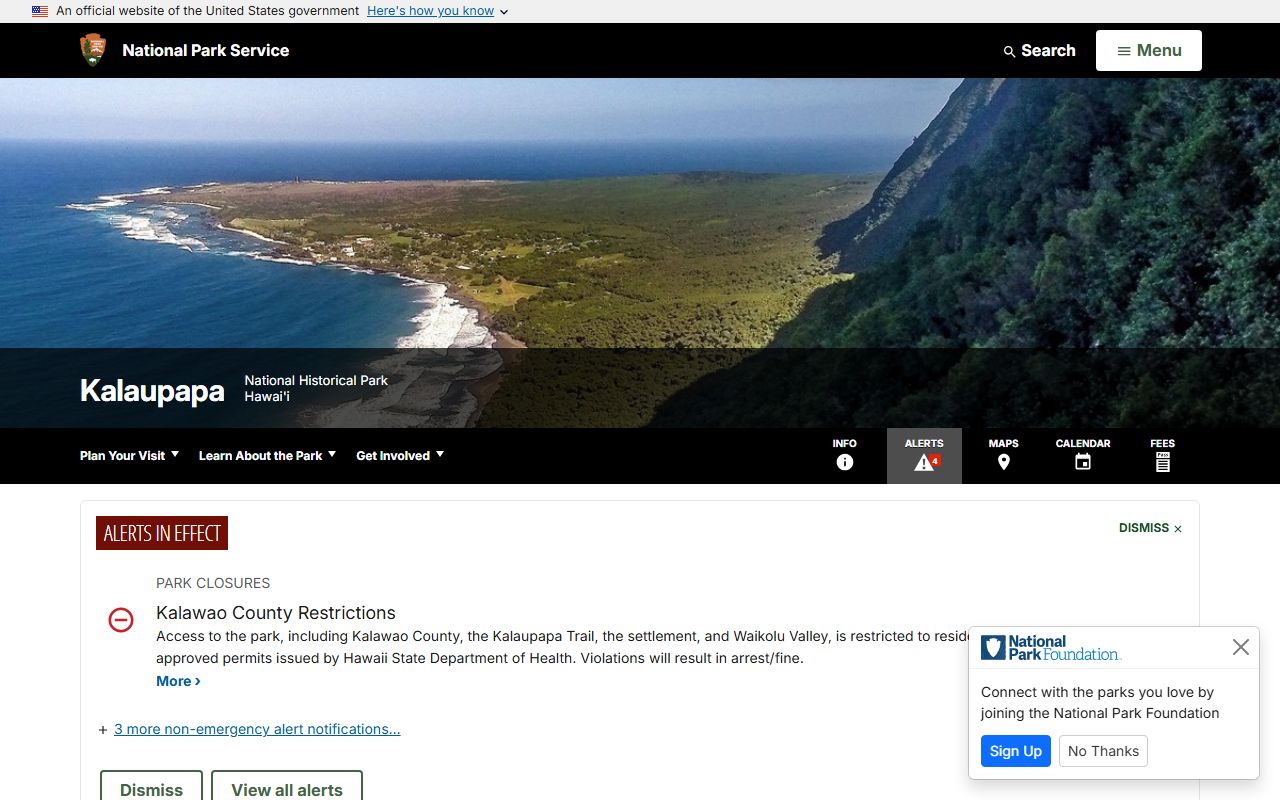
The park also helps the public with research by appointment. Staff guide users to the right archive, permit desk, or state office. They will not hand out the home address of a current resident. The Residents Directory here leans heavily on historic files, while day-to-day resident data is kept close to protect the people who remain.
State Department of Health Records Role
The Hawaii State Department of Health runs Kalawao County. That means DOH is the agency you ask when you need most current records tied to the county. DOH keeps the payroll files, the settlement care records, the visitor permit logs, and the public notices. DOH also signs off on the local law enforcement pick.
Some DOH files are closed. Medical and care files for patients are not open under the Uniform Information Practices Act. HRS § 92F-13 carves out an exception for records that would invade personal privacy. But plenty of other DOH files are open. Budget papers, minutes, and policy memos all can be requested in writing. The reply window runs 10 business days.
For a UIPA request to DOH, send a short letter or email with your name, a mailing address, a phone or fax number, and a clear description of the record. You do not have to say why you want it. Fees may apply. The first hour of staff search time is free, after which costs run $2.50 per 15 minutes. Copies are $0.25 a page. DOH can waive fees in the public interest.
Kalaupapa National Historical Park Records
The National Park Service co-manages the peninsula and keeps a deep set of files on the area. The park website is the first stop for any Kalawao County Residents Directory search that touches history. Park files cover land use, trails, ranger reports, visitor logs, and oral history projects. The park has worked for decades to save the voices of former patients and their families. Many of those tapes, papers, and photos are now part of a research collection that scholars, family members, and the general public can access with staff help.
Access rules matter here. The park limits the number of day visitors. It closes certain areas to protect privacy and to honor the wishes of the people who still live there. Federal law, including the Privacy Act, may also close some park files to the public. Staff can tell you which parts of a file are open and which parts may be redacted.
The park keeps a reading list, a photo archive, and a small set of self-serve research guides. If you are tracing a relative who lived at the settlement, call the park first. They can steer you to the right state or federal office. They can also tell you if a file has moved to the Hawaii State Archives or to the National Archives.
Historic Kalawao County Residents Directory Files
The Hawaii State Archives holds the deepest set of historic records for Kalawao County. Staff there can pull files on the old Board of Health, which ran the settlement for most of its history. The Archives keeps ship manifests, settlement rolls, care logs, burial records, and news clippings. The Archives sits at 364 South King Street on the Iolani Palace grounds. Call (808) 586-0329 to set up a visit.
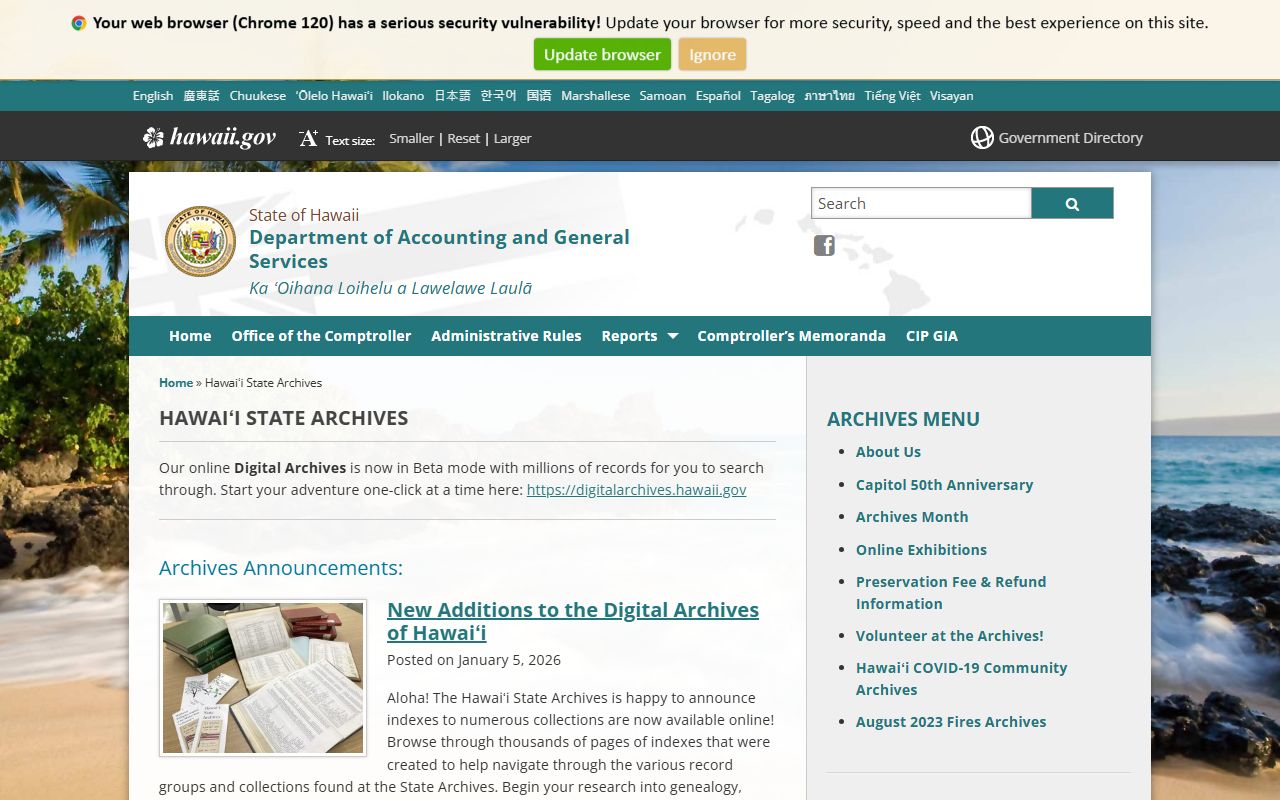
Many of the older files are open with no limits. Birth and death notices from 1850 to 1950 are part of the genealogy set. Some of those notices name Kalaupapa as a place of death. Staff will help you find what you need, but they will not do the full search for you. Plan for a few hours on site. Bring a laptop, a pencil, and a list of names or dates.
The Archives also holds the Mahele Book and early land rolls. Those show who held title to pieces of the peninsula before the settlement was set up. Genealogists use those rolls to link families to their home land. It is slow work. It is also rewarding. The Residents Directory grows richer when you pair the old rolls with current DOH and park files.
Kalawao County Residents Directory Court Files
Court matters for Kalawao go to the Second Circuit Court in Wailuku on Maui. The court sits at the Hoapili Hale complex at 2145 Main Street in Wailuku. Most Kalawao cases are rare, but when they come up, they move through this court. The Second Circuit covers Maui County plus Kalawao, Lanai, and Molokai.
Case files are searchable through eCourt Kokua. Downloads cost $3 per file or 10 cents per page, whichever is more. Court staff can help in person if a file is not online. The court also handles probate, civil, traffic, and family matters. Filings tied to former Kalawao residents often sit in probate and land court, which the Second Circuit handles on a Maui docket.
The Maui Police Department gives backup to the single on-site officer at Kalaupapa. MPD keeps the public police log and dispatch records. A UIPA request to MPD can pull basic call logs. Arrest reports are limited by HRS § 92F-14 when they touch active cases or private health data. The County of Maui also shares some services with Kalawao, mostly on the finance and roads side.
For state corrections matters, the Department of Public Safety runs the SAVIN victim notification tool. Any inmate with a Kalawao tie would show up there by name. That tool is free and open around the clock.
Kalawao County Residents Directory Vital Records
Vital records for Kalawao residents are held by the state, not by the county. The Department of Health Vital Records office issues birth, death, marriage, and civil union certificates for events that took place at Kalaupapa. The main office is at 1250 Punchbowl Street, Room 103, Honolulu. Hours run Monday through Friday, 7:45 a.m. to 2:30 p.m.
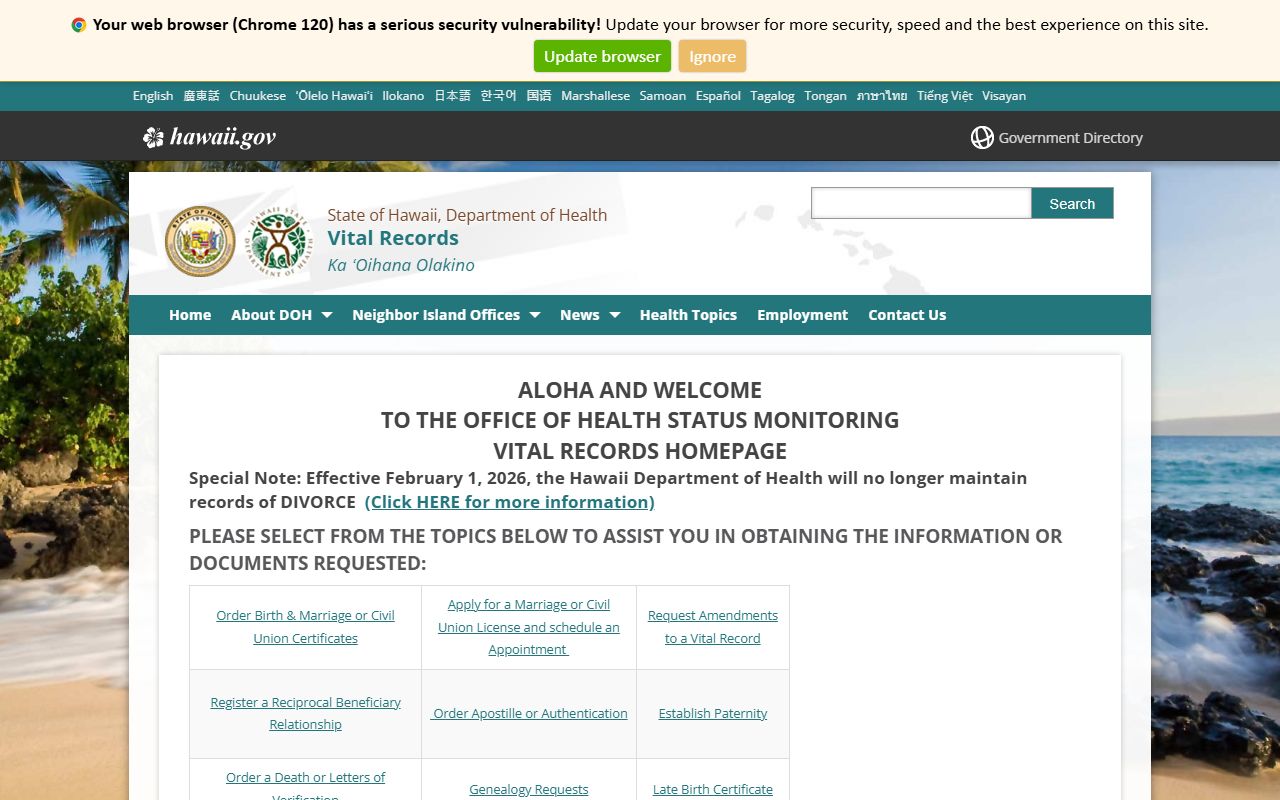
A first certified copy costs $10. Each added copy of the same file runs $4. There is a $2.50 portal fee per order. Only close family or a legal agent can pull recent records. Older files, more than 75 years old for births or 50 years old for deaths, are open to the public for genealogy use. Neighbor island desks help too. The Wailuku desk at (808) 984-8210 is the closest desk to Molokai and handles many Kalaupapa requests.
For land and deed files, the Bureau of Conveyances holds every deed, mortgage, and lien in Hawaii, including those on the peninsula. Hawaii uses a single statewide recorder. So any Kalawao property file sits in the same Honolulu office as every other island's files.
UIPA Rules for the Residents Directory
Any Kalawao County Residents Directory search runs through the Uniform Information Practices Act, HRS Chapter 92F. HRS § 92F-11 sets the base rule. All state and county records are open unless a law closes them. HRS § 92F-12 lists the records that must be made open, like campaign papers, minutes of open meetings, and final opinions. HRS § 92F-13 lists the closed ones, including medical files and active law enforcement cases.
File a UIPA request in writing. The Office of Information Practices gives free help by phone at (808) 586-1400. The Department of Human Services and other state offices take UIPA requests by email, fax, or mail. The agency has 10 business days to reply. If they deny, you can appeal to OIP. OIP can issue a formal opinion that often settles the dispute.
Keep copies of every letter and every reply. Save the agency's file number. If they miss the 10-day window, you can escalate under HRS § 92F-15. Write short. Be clear. Give enough detail for staff to find the file with a light search. These steps keep fees down and speed up the work.
- Name the agency you are writing to.
- Describe the record in plain words.
- List your name, mailing address, and phone.
- Ask for the fee estimate up front.
- Note if you want paper or a PDF.
Communities in Kalawao County
Kalawao has no cities or towns in the usual sense. The only community is the Kalaupapa Settlement itself, which sits inside the national park. The settlement has homes, a small store, a church, and a medical station. It does not have a city clerk, a city police force, or a city court. Because of that, there are no city pages tied to Kalawao County on this site. All searches for residents here go through the state and park offices already noted.
The Kalawao County Courthouse mailing address is 74-5044 Ane Keohokalole Highway, Kailua, HI 96740. Phone (808) 323-4881. That address is used for the few formal county filings that still need to list a county seat.
Nearby Counties
Kalawao sits close to Maui County in both miles and in service links. Molokai, the rest of which is part of Maui County, wraps around the peninsula. The other three counties in Hawaii handle their own records but often share state tools with Kalawao.