
Search Hawaii Residents Directory
The Hawaii Residents Directory pulls together the public records you use to look up people, property, court cases, and licensed businesses across the state. Each of the five counties keeps its own files, and many state agencies run their own search tools on top of that. You can search by name, address, or Tax Map Key (TMK). Some portals are free. A few charge per document. This page helps you find the right agency for the Residents Directory lookup you need.
Hawaii Residents Directory Overview
Where to Find the Hawaii Residents Directory
Hawaii does not run one single Residents Directory. The data sits across many state and county offices. The Office of Information Practices (OIP) runs the hub for public records law in Hawaii. OIP keeps the Records Report System (RRS), a database that lists more than 26,000 record titles held by state and county agencies. The RRS tells you which agency holds the records you want. That is often the first step in any Residents Directory search.
OIP also runs an Attorney of the Day service for free, non-binding advice about the Uniform Information Practices Act. Call (808) 586-1400 or email their office. They can point you to the right agency, tell you what form to use, and explain what is open to the public. For a full view of their work, the screenshot below shows the OIP landing page and its core resources.
The OIP office sits at 250 South Hotel Street, Suite 107 in downtown Honolulu. Visit the OIP website to grab forms and to read past opinions.
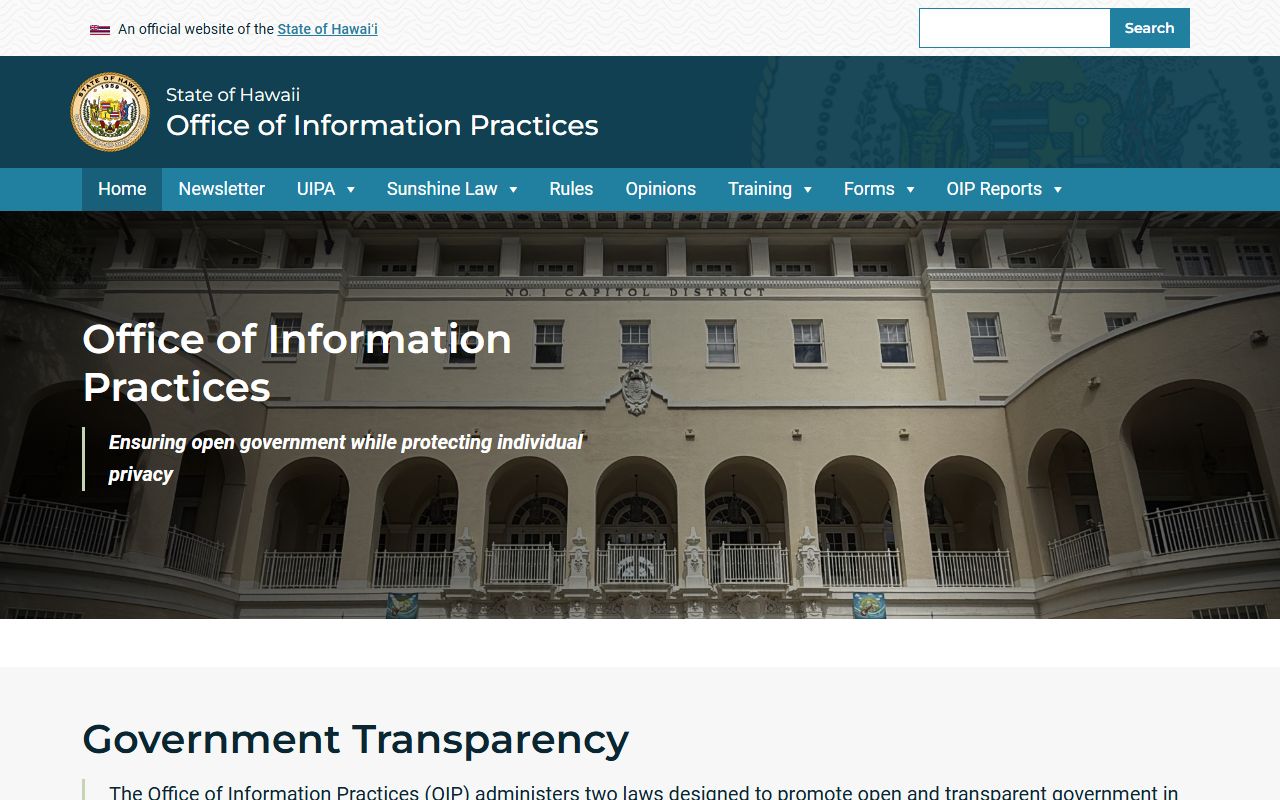
OIP also helps with appeals. If an agency denies your Residents Directory request, you can file an appeal with OIP. Their staff reviews the record, weighs the privacy and public interest, and issues an opinion. Some opinions carry the force of law. Others are just guidance. Either way, they shape how agencies handle similar requests later on.
Note: The Records Report System does not hold the records themselves. It tells you which agency has them.
How the Hawaii Residents Directory Works
Public records in Hawaii fall under the Uniform Information Practices Act (UIPA), Chapter 92F of Hawaii Revised Statutes. HRS § 92F-11 says all government records are open to the public unless a law closes them. That rule is the base of the Residents Directory. It means names, addresses, and other basic data held by the state are open unless the law says otherwise. The UIPA statutes page shows the full text of the law.
Requests under UIPA must be in writing. You do not have to say why you want the record. You do need to give enough detail so the agency can find the file with reasonable effort. The agency has 10 business days to reply. They can charge fees for search, review, and copies. The first hour of search time is free. After that, costs run $2.50 per 15 minutes.
Below is a look at the UIPA statute page hosted on the Hawaii State Legislature site. This is where you can read the law word for word.
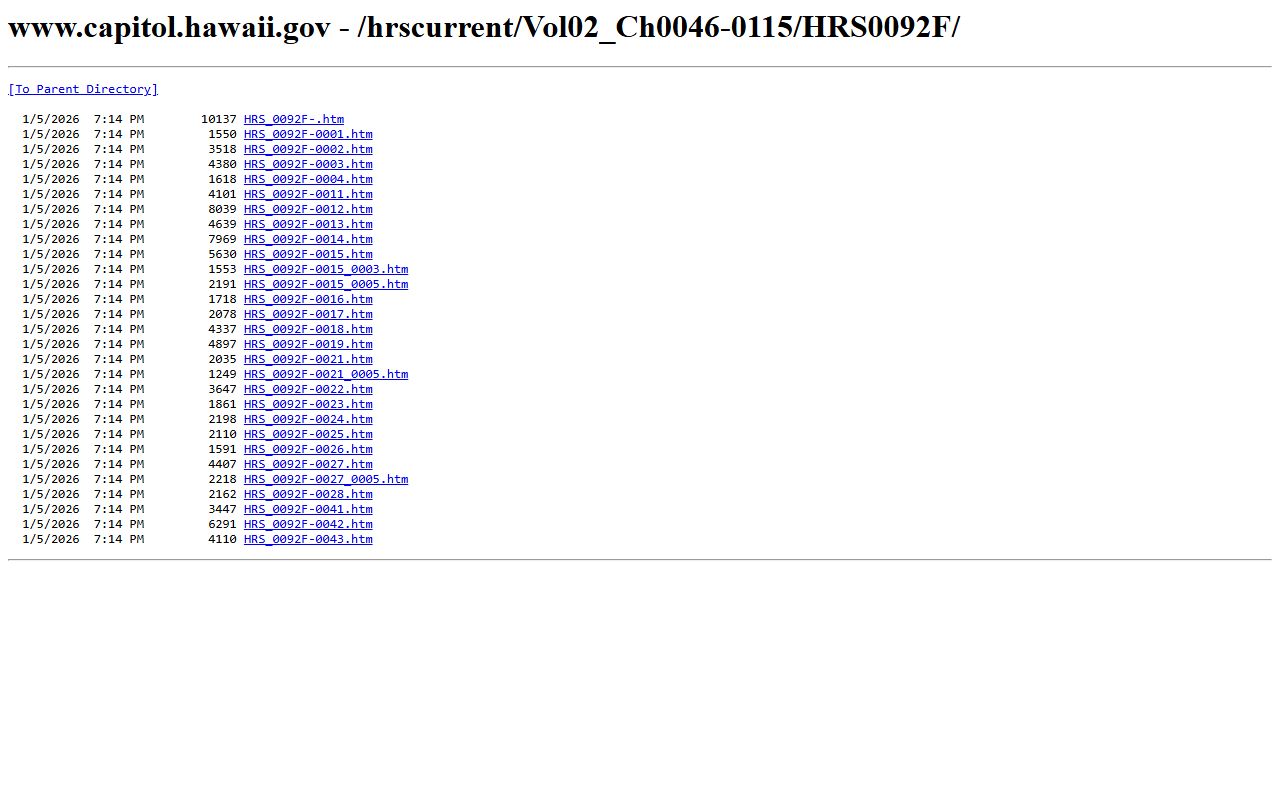
The law has five main exceptions: personal privacy, current court cases, records that would frustrate a government task, records sealed by court order or other law, and personal records that would be a clear invasion of privacy. Agencies balance these against the public interest. Most addresses, business filings, and court dockets fall on the open side of that line.
State Agencies Behind the Residents Directory
Many state agencies feed data into the Hawaii Residents Directory. Each one holds a piece of the puzzle. The Department of Health Vital Records office issues birth, death, marriage, and civil union certificates for events in Hawaii. The office sits at 1250 Punchbowl Street, Room 103, Honolulu, and is open Monday through Friday from 7:45 a.m. to 2:30 p.m. A first certified copy is $10. Each added copy of the same record is $4. There is also a $2.50 portal fee per order.
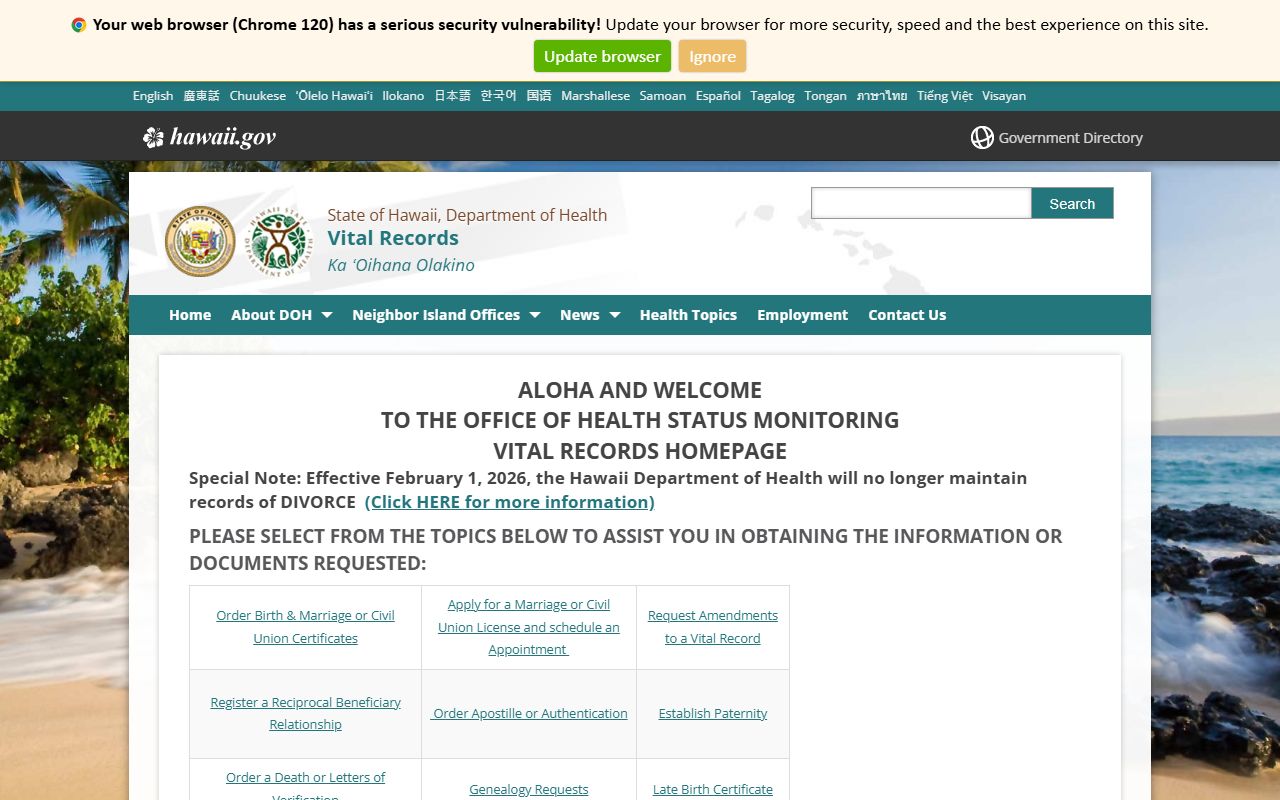
Effective February 1, 2026, the Department of Health no longer keeps divorce records. For those, contact the Hawaii State Judiciary instead. Neighbor islands have their own vital records desks: Hilo at (808) 974-6008, Kamuela at (808) 887-8114, Wailuku at (808) 984-8210, and Lihue at (808) 241-3498.
The Bureau of Conveyances under DLNR handles all real estate records for the state. Hawaii is one of only two states in the nation that uses a single statewide recording system. That means every deed, mortgage, and lien for every island goes through the same office. The Bureau sits at 1151 Punchbowl Street, Room 123, Honolulu.
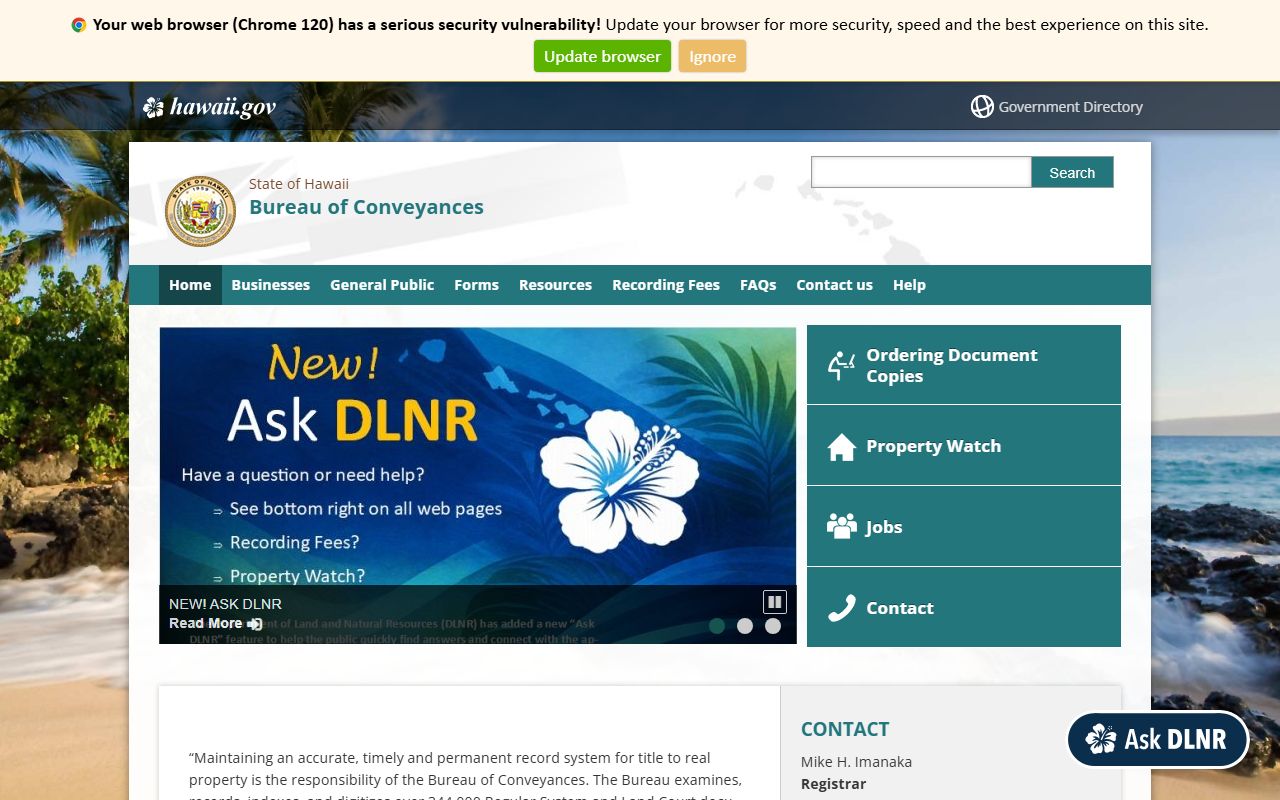
Documents recorded from 1976 on are online. Older files need an in-person visit or a mail request. Credit card users pay $1 per page per document. Monthly plans run $50 for public use or $1,000 for unlimited. Search options include grantor and grantee names, TMK numbers, and document numbers. Recording fees start at $41 for a standard doc and go up to $106 for a nonstandard filing.
Court Records and the Residents Directory
Court filings make up a big part of the Hawaii Residents Directory. The Hawaii State Judiciary runs eCourt Kokua, a free search tool that covers traffic, District Court, Circuit Court, Family Court, Land Court, Tax Appeal Court, and appellate cases. You can search by party name, vehicle details, or case ID. Basic lookups cost nothing.
Here is a screenshot of the eCourt Kokua landing page, showing the case search menu and the links to circuit court portals.
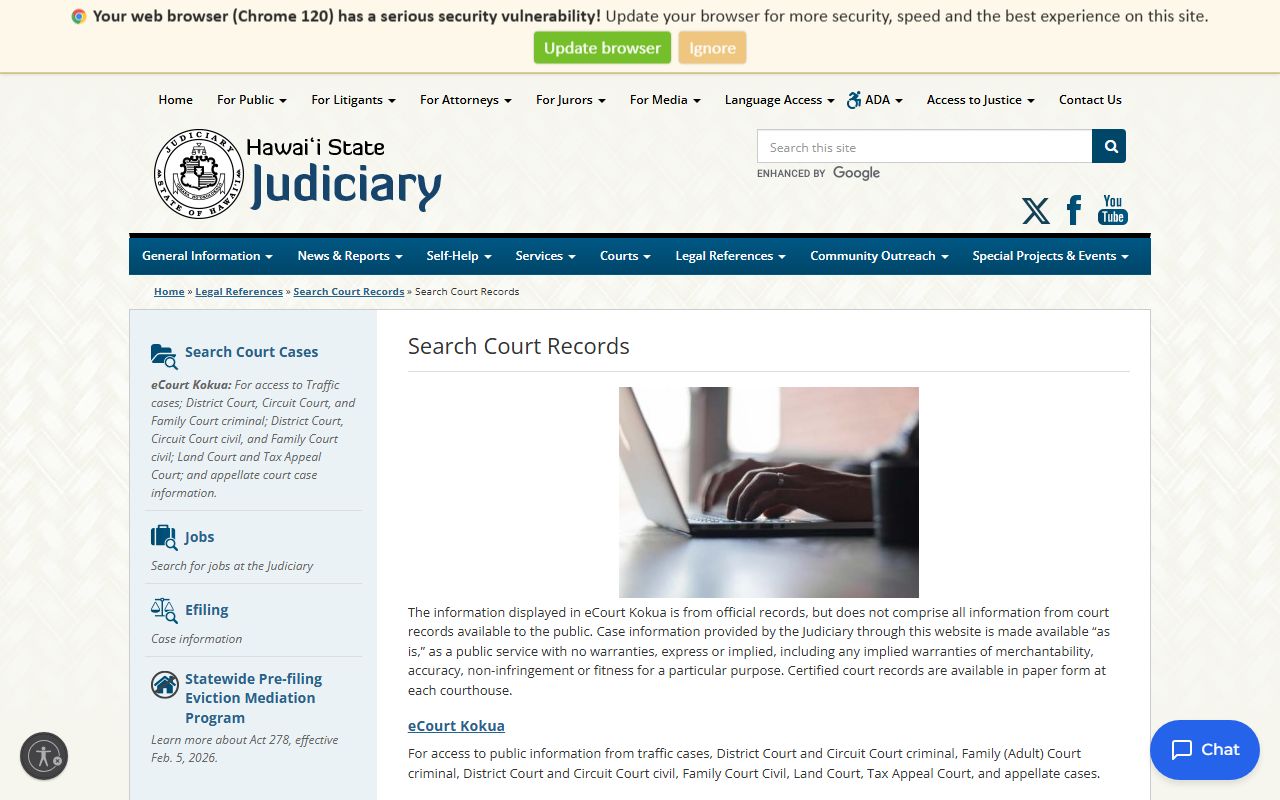
Downloads cost $3 per document or 10 cents per page, whichever is more. Certified copies add $2 each. A subscription is $125 per quarter or $500 per year and lets you pull unlimited single documents with PDF icons. Not every file is online. Most traffic papers sit only at the courthouse. If a docket entry has no PDF icon, you must go in person to grab it.
The Hawaii Criminal Justice Data Center handles criminal history background checks. The office sits at 465 South King Street, Room 101, Honolulu. LiveScan electronic fingerprinting is accepted for most licensing boards, courts, and employment agencies. The CJDC does not offer screening products for landlords or for hiring decisions. Personal record reviews are open to the individual whose record it is.
Property Records in Hawaii
Every piece of land in Hawaii has a TMK, short for Tax Map Key. The TMK is a six-part code. Think of it like a social security number for land. The first digit tells you the island: 1 for Oahu, 2 for Maui, 3 for Hawaii Island, and 4 for Kauai. The rest breaks the land down into zone, section, plat, parcel, and condo unit. Each county runs its own TMK search.
Oahu searches go through qPublic Honolulu. Maui uses the Schneider qPublic portal. Hawaii Island residents search at hawaiipropertytax.com. Kauai users go to kauaipropertytax.com. All four sites let you look up a parcel by owner name, address, or TMK. All four are free for basic searches. The state-level Bureau of Conveyances handles recorded deeds and mortgages.
Note: Hawaii's TMK format is (Island) Zone-Section-Plat-Parcel-CPR. Knowing the island digit speeds up every Residents Directory property search.
Business and License Records
The Business Registration Division of the Department of Commerce and Consumer Affairs keeps all business entity records for the state. Their online search lets anyone look up a business by name. The file shows the officers, the agent for service, the mailing address, and the status of each entity. The office sits at 335 Merchant Street, Room 310, Honolulu.
DCCA also runs the Professional and Vocational Licensing Search. That tool lets you check license status for real estate agents, contractors, nurses, doctors, lawyers, and many other trades. Tax license records and unclaimed property searches are on the DCCA page as well. Fee waivers may apply when a request serves the public interest.
The Campaign Spending Commission is the go-to source for campaign finance filings. Candidates and committees must report their money in and their money out. The public can search these reports online at any time. That makes the Commission a key part of the Residents Directory for anyone tracking elected officials or political donors.
Corrections and Public Safety Records
The Department of Public Safety runs the state's jails and prisons. The department operates the Oahu Community Correctional Center in Honolulu, the Hawaii Community Correctional Center in Hilo, the Maui Community Correctional Center in Wailuku, the Kauai Community Correctional Center in Lihue, and the Women's Community Correctional Center in Kailua. It also runs the Halawa Correctional Facility and the Waiawa Correctional Facility for sentenced inmates.
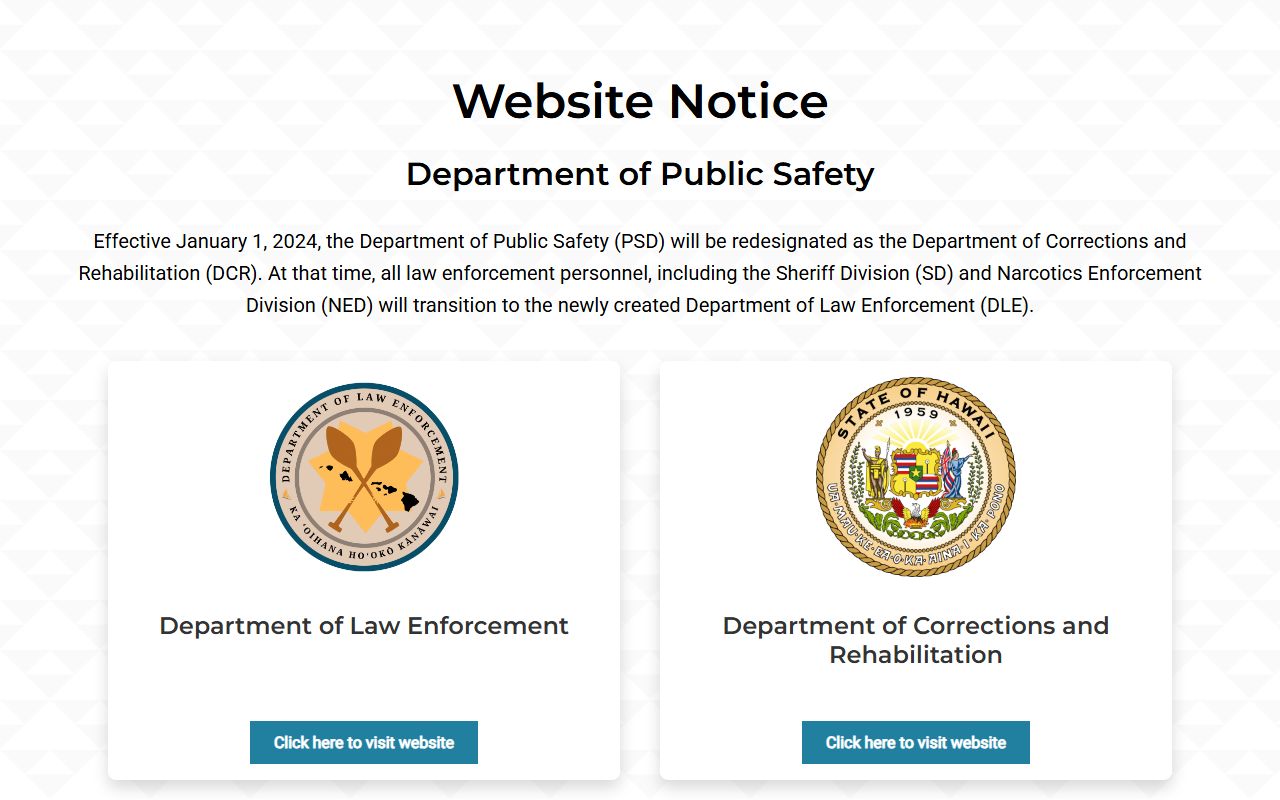
The department runs the Hawaii Statewide Automated Victim Information and Notification (SAVIN) system. SAVIN is open 24 hours a day, seven days a week. Users can search by inmate name and can sign up for free alerts about custody status changes. The site also lists visitation rules and facility contact details.
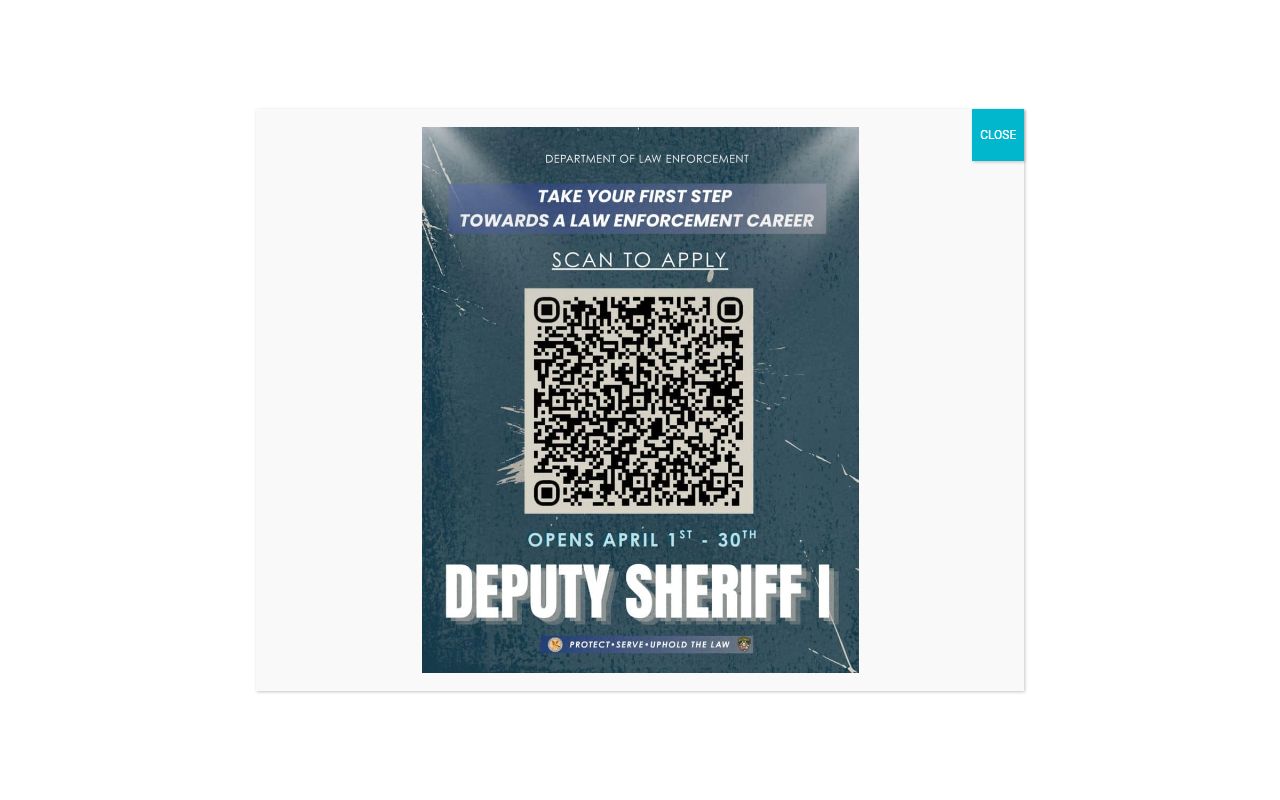
The Department of Law Enforcement accepts UIPA requests for police records. The main office sits at 715 South King Street, Room 505, Honolulu. Email requests go to the department's records staff. The UIPA request must be in writing, must describe the record, and must say how the requester wants the record delivered.
Human Services and Agency Requests
The Department of Human Services handles UIPA requests for benefit, child welfare, and adult services records. DHS staff ask for a written request that names the agency and describes the record. You do not have to say why. You should list your name, a mailing address, and a phone or fax number. The department will get back to you within 10 business days under UIPA.
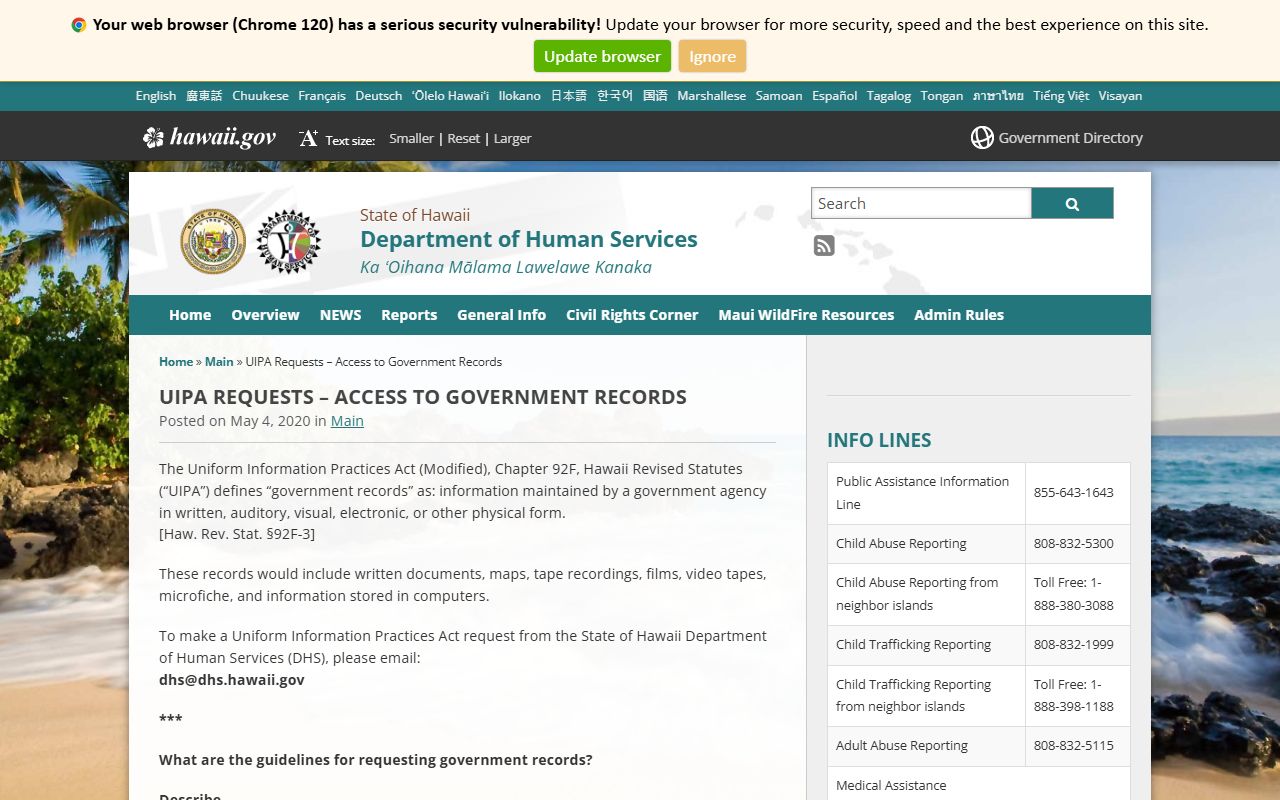
Requesters can ask to be told of the cost before the request is filled. Costs include search, review, and copy fees. The first $30 is waived by some agencies. After that, the fees run $2.50 per 15 minutes for search, $5 per 15 minutes for review, and $0.25 per page for copies.
State Archives and Old Records
The Hawaii State Archives keeps permanent government records, old photos, maps, and the Mahele Book. The Archives sits at 364 South King Street on the Iolani Palace grounds. Call (808) 586-0329 for help. Genealogists often use the Archives for birth notices from 1850 to 1950, obituary notices from 1836 to 1950, ship passenger manifests, probate files, naturalization papers, and census data.
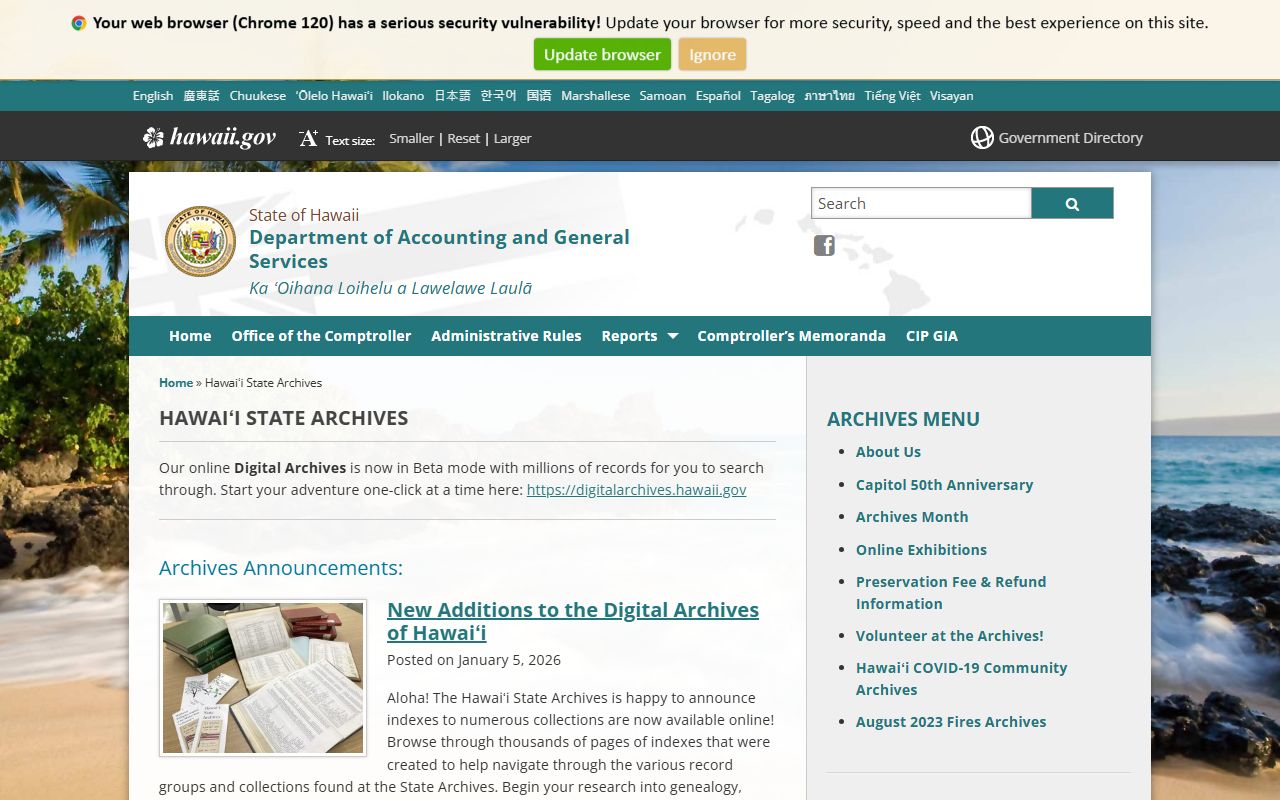
Some older microfilms are in the Digital Archives. World War I draft cards, Japanese and Portuguese passenger lists, and other key collections are all online now. The Archives staff post new indexes on a rolling basis. This is a great resource for anyone tracing family history or old property titles.
Public Records Access Rules in Hawaii
Hawaii law starts from the idea that records are open. Under HRS § 92F-11, all government records are open to the public unless access is restricted or closed by law. That applies to state and county files alike. You do not need a reason to ask for a record. You do not need to be a resident. Agencies must still check for exceptions before they release.
Some records have limits. Sealed juvenile files, active criminal investigations, and medical data are closed. Social security numbers, bank account numbers, and some home addresses get redacted. The law protects personal privacy but leans toward disclosure when in doubt.
Note: Any UIPA request must be in writing under HRS § 92F-11 procedures. A form is not required but is a good idea.
Keep a copy of every record request you send. If an agency misses the 10-day reply window, you can escalate the case to OIP.
Hawaii Residents Directory by County
Each of Hawaii's five counties handles its own slice of the Residents Directory. Some counties offer rich online tools. Others direct you to state resources. Pick a county for local office details and search links.
Hawaii Residents Directory by City
Pick a major Hawaii city below to see local offices, police districts, libraries, and court resources that feed the Residents Directory.